
Bedtime guide · 03
Bedtime stories
for kids
a calmer end to the day
The best bedtime story is not the longest or most educational one. It is the story that fits your child tonight and sits inside a routine everyone can repeat tomorrow.
The short answer
Choose a short, age-appropriate story, keep the same few bedtime cues, and stop while your child is still settled rather than stretching the reading to a perfect ending.
Read live when you can. On exhausted, hoarse, or far-away nights, a familiar recording can keep the ritual recognisable without asking a parent to perform through it.
Before you choose
Choose for the child you have tonight
Age labels are a starting point, not a rule. A toddler may want one sturdy picture book repeated for a week; a school-age child may prefer a chapter, a funny family memory, or an audio story they can continue tomorrow.
Look at three things: how much language your child can comfortably follow, how alert they are, and what mood the story leaves behind. Save fast, noisy adventures for earlier if they make it harder to settle. At bedtime, familiar plots, gentle humour, repetition, and a clear ending are often easier to leave.
Use fewer characters and more repetition for younger listeners; add longer plots or chapters when attention grows.
Begin with five to ten calm minutes and follow the child, not the clock. A short story that ends well is enough.
Choose a story that leaves the room quieter, safer, or pleasantly curious rather than tense and wide awake.
A small legal note: if the story is not your own, check that you have permission to record and use it. Copyright rules differ by country, and distributing a recording is not the same as keeping a private family reading.
The evening
Seven steps from busy evening to familiar goodnight
-
01
Start with the same small cue
Let the story follow a repeatable action such as brushing teeth, putting on pyjamas, closing the curtains, or choosing a soft toy. The cue tells the body that the active part of the day is ending.
-
02
Offer two suitable choices
Too many books turn bedtime into negotiation. Pick two you are genuinely willing to read and let the child choose. On very tired nights, offer a short favourite and a saved audio option.
-
03
Lower the light and put bright screens aside
Use enough warm light to read comfortably, but move stimulating video and endless scrolling out of the ritual. If you play audio from a phone, start it first and then leave the screen alone.
-
04
Read a little slower than daytime conversation
Keep your natural voice, soften the volume, and leave a pause at page turns. You do not need elaborate character acting. A steady pace helps the story feel like a bridge, not another burst of entertainment.
-
05
Invite connection, not a quiz
One gentle question is enough: “What do you think happens next?” or “Which part did you like?” If your child is already sleepy, let the words pass without checking comprehension.
-
06
End with the same closing phrase
Close the book, name that story time is finished, and use one familiar goodnight sentence. A predictable ending makes it easier to resist adding three more activities after the last page.
-
07
Prepare a low-energy backup before you need it
Record a favourite story or family message on a healthy, unhurried day. When you are exhausted, your throat hurts, or you are away, that familiar voice can support the routine while another adult stays present.
For an ordinary evening
The two-minute bedtime story checklist
- One or two suitable stories are ready
- The story matches tonight’s energy level
- Bright video and notifications are out of the way
- The reading spot feels comfortable and safe
- The planned length is realistic for the adult too
- Live reading or the audio backup is ready
- The final goodnight phrase stays the same
- Stopping early is allowed when calm has arrived
Troubleshooting
Protect the calm, not a perfect streak
I am exhausted or my throat hurts
Choose the shortest familiar story, ask another trusted adult to read, or use a recording prepared earlier. Stay nearby if your child needs you, but do not force a long performance. Rest a painful voice and seek medical advice if you are concerned.
My child asks for the same story every night
Repetition is not a failure of variety. Familiar words let a child predict, join in, and relax. Keep the favourite and occasionally place one new option beside it without removing the old one.
Stories make my child more excited
Move energetic books earlier, choose a shorter and more predictable story, and soften what happens after the last page. Avoid turning bedtime reading into loud character play if it consistently wakes the room up.
The story suddenly feels scary
Stop rather than pushing to the ending. Name what felt frightening, remind the child that they are safe with you, and switch to something familiar. You can revisit the book in daylight if they want to.
Travel or a late evening breaks the routine
Keep two portable anchors: the same short story or recording and the same closing phrase. The room and time can change while the order remains recognisable.
Coming soon · iOS and Android
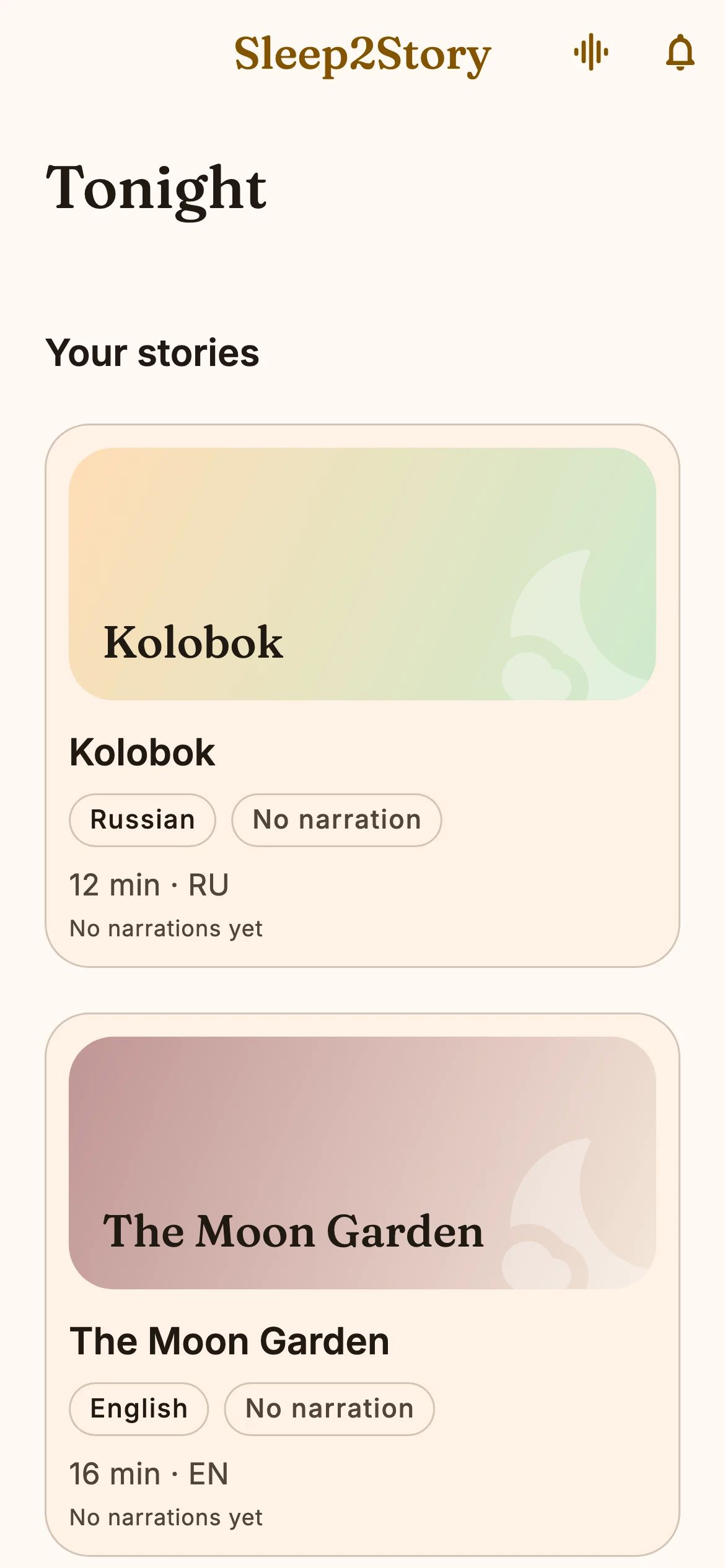
One short voice sample. A whole family library.
Sleep2Story is being built for parents who want full bedtime stories prepared in a familiar, consented family voice. Record or upload a voice sample you have the right to use, add the complete story text, and let the narration prepare in the background.
- Multiple saved family voices
- English and Russian narration at launch
- A personal library with saved listening position
Questions parents ask
A few answers for a calmer bedtime
How long should a bedtime story be?
There is no perfect number. Five to ten minutes is a useful starting point for many families, but attention and calm matter more than the clock. End earlier when the child is settled; split a longer story into chapters.
Are audio bedtime stories good for children?
Audio can be a useful part of the routine, especially when the voice is familiar and an adult remains available. Treat it as another way to share a story, not as a promise that every child will fall asleep or as a replacement for all live connection.
Is it okay to read the same story every night?
Yes. Repetition supports participation and makes the sequence predictable. You can add variety gently by offering one familiar choice and one new choice.
What age can bedtime stories begin?
You can begin in infancy with a few calm pages, a rhyme, or the sound of a familiar voice. As language and attention grow, adjust the words, pictures, length, and level of interaction.
Further reading
Useful, primary sources
- Apple Support: make a recording in Voice Memos
- American Academy of Pediatrics: Brush, Book, Bed
- World Intellectual Property Organization: copyright FAQ
Sleep2Story provides practical recording guidance, not legal or medical advice.