
For tired parents · Guide 04
Too tired to read a bedtime story?
The book is open, your child wants one more story, and you have no energy left to read aloud. Here is a small plan for this evening, including the nights when speaking hurts.
The short answer
Choose the version of storytime you can manage tonight.
If your voice feels fine, read a very short favourite or look at a book together. If speaking is uncomfortable, ask another trusted adult to read or use audio you already have. Keep the familiar goodnight; save recording a new story for a day when your voice feels well.
Decide what needs to be easier
Sometimes the problem is the length of the book. Sometimes you cannot face doing the voices again. And sometimes you have a sore throat and reading aloud is simply uncomfortable. Those evenings need different choices. A shorter book helps with tiredness; it does not solve a voice that needs a rest.
Before offering a choice, decide what you can actually do. “These two pages or our saved story?” is easier to keep than “Choose anything.” You do not need to search for the perfect new bedtime story while your child waits. Start with a book, recording or other adult already available to your family.
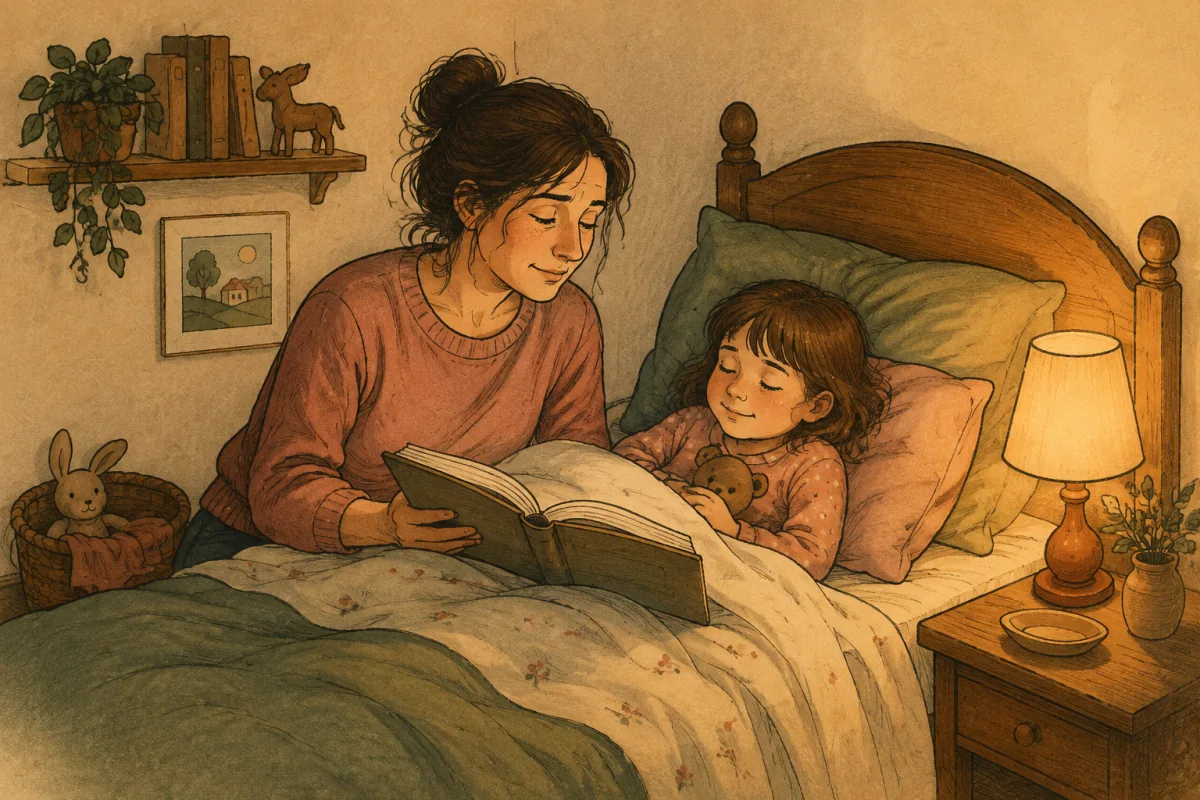
Start with what you have
Four ways to keep a story in tonight’s routine
Choose one option, rather than trying all four. If your child is already ready to stop, you can go straight to your usual goodnight.
Read a smaller piece of a familiar book
When you are tired but speaking is comfortable, choose one short story, two favourite pages or a single chapter. Say where you will stop before you begin. A bookmark gives a longer story a clear place to wait until tomorrow.
Use your ordinary speaking voice. You can leave out the elaborate character voices and sound effects. If your child asks for more, offer a clear ending: “That is our story for tonight. We can carry on from this page tomorrow.” The amount should fit both of you, not a rule about how many minutes a good parent reads.
Let the pictures carry the story
Open a book your child knows and invite them to point, turn a page or tell you what they notice. A child who does not yet tell stories can simply choose a favourite picture. You can listen and respond with a smile or a nod; it does not need to become a lesson.
Try a small invitation such as “Show me where the little bear went.” If talking is uncomfortable, let the pointing and page-turning do the work. If your child does not want a turn, choose another option. They do not need to perform the whole book because the adult is tired.
Hand over the reading, with a clear ending
If another trusted adult is available, ask for a specific handover: this book, these pages, then the usual goodnight. You can stay nearby if that works for your family, or let that adult take over. There is no need to recreate your reading style exactly.
A relative on a call is another possibility when timing and the child’s mood make it practical. Agree on one story beforehand. A live conversation may turn into an exciting catch-up, so treat a call as a choice, not something you must arrange at bedtime. A recording prepared earlier needs no matching time zone.
Play an audio story you have already chosen
A familiar family recording or an age-appropriate audio story can do the reading while you rest. Choose the track yourself, check the beginning and ending, and set it to stop after the story if your player allows. Keep the volume comfortable and the device and any cables out of your child’s reach.
Start the audio, then leave the screen alone. If your child wants the book, they can look at it alongside the recording. Stay available for questions or a change of mind. If audio makes this particular evening busier, stop it and return to a quieter option. You do not need a new account or a long search through recommendations tonight.
A sore throat is a reason to change the reading plan
If your voice is hoarse or tired, rest it; whispering is not a workaround. That is voice-care guidance from the US National Institute on Deafness and Other Communication Disorders (NIDCD). Read NIDCD’s voice-care guidance.
For storytime, choose a no-speaking option: another adult, a recording you already have, or looking at pictures together. Recording a fresh voice sample tonight asks you to use the same voice you are trying to rest. Prepare it later. This article offers alternatives to reading, not a diagnosis or treatment; seek medical advice if symptoms worry you or do not improve.
What to say when your child asks for your voice
A short explanation and a choice are usually easier to offer than a long negotiation. These are example phrases to adapt, not lines you have to get right. If speaking hurts, another adult can explain the plan.
- When you have very little energy
- “I’m very tired tonight. We can read these two pages together, then say goodnight.”
- When your voice needs a rest
- “My voice needs a rest. We can look at the pictures together while someone else reads.”
- When you have a saved recording
- “Tonight the recording will read our story. I can sit with you while we listen.”
If none of the options works, close the book and use your ordinary goodnight. You can offer a story at another time. This evening does not need a replacement activity for every minute you planned to read.
Prepare a tiny story backup on a better day
You only need a small starting collection, not a second project to manage. On a day when you have some energy and your voice feels comfortable, make the next tired evening easier in three steps.
Choose one short favourite you may record
Use your own story or a text you have permission to record and use. A familiar beginning and a clear ending make it easy to choose later. If the book is long, pick a permitted short section rather than promising to finish the whole thing in one sitting.
Record, listen back and name the file clearly
A phone recording is a practical starting point. Listen once to check that the words are clear and the ending is complete. Include the story title and reader in the filename, and keep the original somewhere you control. If another family member records it, agree how their voice and recording will be used.
Check how it will play before you need it
Open the recording on the device you will actually use at bedtime. Check whether it requires internet, whether the audio continues when the screen is put away, and what plays after it. These features depend on the player. Put the chosen story somewhere an adult can find without browsing a whole library.
Want help with the recording itself? Our phone-recording guide covers the room, a short sound check and common audio problems. If you already have a routine that works, keep it; this backup only needs to fit into it.
Being prepared for iOS and Android
A familiar family voice, prepared ahead of time
Sleep2Story is being developed for this kind of preparation. An adult records a short voice sample with the speaker’s consent and adds the complete story text. The app prepares a synthetic narration in the chosen family voice for listening in a personal library. It does not write the story or preserve an original reading of those exact words.
The app is not yet available in the stores. English and Russian narration are planned for launch; a translated website page does not mean that narration in that language is available. For tonight, use an option you already have. Sleep2Story is one way to prepare for future evenings, not an immediate remedy for a tired or sore voice.
See how Sleep2Story works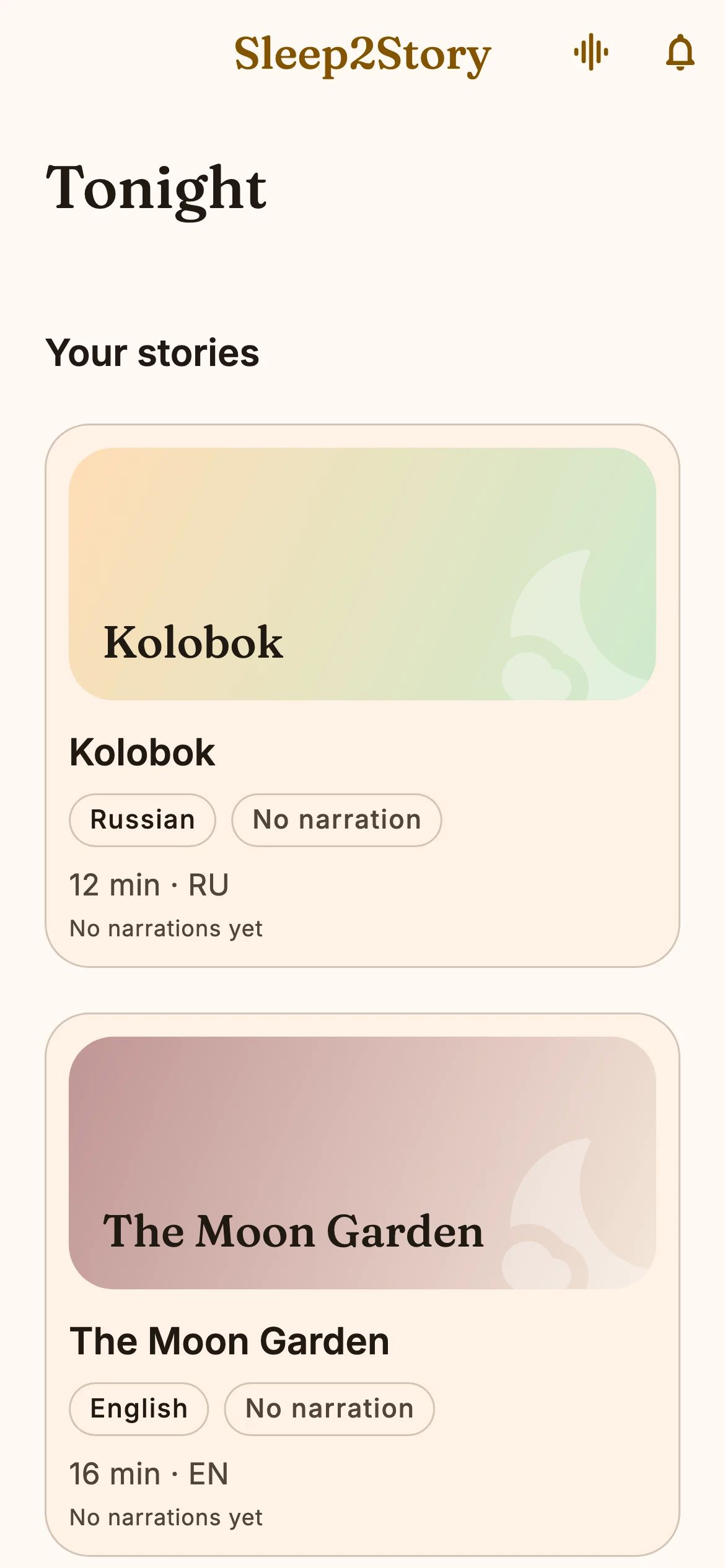
Questions parents ask
Questions that come up on tired evenings
Is it okay to skip the bedtime story tonight?
If reading is more than you can manage tonight, you can keep the goodnight and offer a book at another time. A shorter story, shared pictures or another reader are options, not extra tasks you must complete. Pick what is manageable for your family.
What if I have a sore throat but my child wants me to read?
Explain briefly that your voice needs a rest, or ask another adult to explain. Offer pictures, another reader or an existing recording. You do not need to make a new recording while your voice is uncomfortable. Follow appropriate medical advice about your symptoms.
Can an audio bedtime story replace reading aloud?
It can take over the narration on a particular evening, but it is a different experience from talking about a book together. An adult can still be present, pause the track and respond to the child. This is a practical option, not a claim that audio and shared reading have identical benefits.
What if we have no recording ready?
Start with what is available: a shorter book if speaking is comfortable, looking at pictures, or another trusted reader. Do not turn tonight into a recording session. You can prepare one saved story when you have more energy.
Should I promise a longer story tomorrow?
Only promise something you expect to be able to do. “We can come back to this book” leaves room for how tomorrow goes. A simple, honest ending is easier to keep than agreeing to three extra stories when you do not know how you will feel.
Help with the next small step
Sources and scope
- NIDCD: Taking Care of Your Voice (English)
- American Academy of Pediatrics: Brush, Book, Bed (English)
- World Intellectual Property Organization: copyright FAQ (English)
The practical examples and suggested phrases are Sleep2Story editorial suggestions. The sources below provide background on voice care and bedtime routines; they do not establish that a particular app helps a child sleep.