
Family time apart · Guide 06
Keep storytime familiar when a parent is away
Work travel, a night shift or time in another home can change who is beside the bed. A small plan lets the story, the familiar words and the adult who is there still carry the evening.
The short answer
Keep three things steady: the order, the story cue and the final words.
Decide before the evening whether the away parent will join live, leave a full recording or send a short message. Give the adult at home the story choice and exact goodnight phrase. Keep one ready-to-play backup so a delayed train, weak signal or changed shift does not decide bedtime.
Start with the bedtime your child already knows
Do not rebuild the whole evening around the person who is leaving. Write down the part that already signals storytime: pyjamas, one drink of water, the blue blanket, then a story. Choose two or three details the adult at home can repeat without turning bedtime into a performance.
Explain the absence in plain words that match your family’s situation and say who will be there at bedtime. If the dates are known, mark the nights on a simple calendar. Avoid promising a live call every evening unless the schedule and connection really make that dependable.
PBS KIDS for Parents likewise suggests explaining travel plans, using a calendar and asking the caregiver to maintain daily routines read its travel preparation tips.

Before the first night apart
Prepare the bedtime story plan in four steps
Make the smallest plan another adult can actually use. One dependable story is more useful than a folder of unfinished recordings.
Choose one anchor
Keep a familiar object, line or action in the same place each night: the striped blanket, choosing between two stories, or “See you after breakfast.” The anchor should work even if the away parent cannot connect.
Choose the story
Use a story the child already likes, or prepare one complete original text. Put the book or text where the caregiver can find it. If you record a published book, keep the recording private and check the rights before sharing it outside your household.
Prepare one contribution from the away parent
Pick one: a scheduled call, a recording of the whole story, or a short hello and goodnight message. Name the file clearly and test it on the device that will be used at bedtime.
Rehearse the ordinary version
Try the routine once before the trip or new shift. Let the at-home adult start the story and finish the goodnight. The child then sees that the routine still has a beginning and an ending when roles change.
Give the caregiver a five-line handoff note
A note removes small decisions from an already busy evening. Send it in the message thread both adults actually open.
- 1. Start
- Story begins after teeth and pyjamas, at about 7:40.
- 2. Choice
- Offer the rabbit book or the moon story; one story tonight.
- 3. Parent part
- Call at 7:45. If there is no answer after one try, play “Tuesday story”.
- 4. Closing words
- After the story say, “Goodnight. We are here, and morning comes next.”
- 5. Tomorrow
- The child may send one drawing or voice note; no reply is needed before bed.
Change the sample to your real routine. The useful part is precision: one start point, one choice, one backup and one ending. Do not turn the note into a page of rules the caregiver must reproduce perfectly.
Choose by reliability, not novelty
Live call, full recording or short message?
Each format does a different job. Choose one main option for the trip and keep another as backup.
Use a live call for a short conversation
A call works when the time is predictable and the child wants interaction. Keep it simple: say hello, read one short section or ask one question, then let the adult in the room close bedtime. If calls tend to run late, put them earlier in the evening.
Use a full recording for a repeatable story
A recording is ready across time zones and poor connections. It also preserves the parent’s actual pacing, laughter and character voices. Record the whole story in advance and listen once on the bedtime device before relying on it.
Use a short message beside a caregiver’s reading
A ten- or twenty-second hello can be enough when there is no time to record a book. The caregiver reads the story, then plays the message at the agreed point. A specific line such as “I hope you choose the moon story tonight” feels more connected than a generic speech.
United Through Reading describes starting recorded family storytime before deployment and placing it inside a repeatable ritual; its program serves military families, while the preparation idea can be adapted without assuming every family has the same circumstances read the family storytime article.
Write the missed-call plan before anyone needs it
A missed call should change the method, not cancel the story. Agree on the following sequence while everyone is calm.
Name what happened briefly
The caregiver can say, “The call did not work tonight. We have the story ready.” Do not make the child wait through repeated dialing while bedtime gets later.
Use the prepared substitute
Play the full recording, use the short message and read the book, or continue with the caregiver alone. Keep the same blanket, story choice and closing words.
Leave reconnection for tomorrow
Send a drawing, photograph or voice note the next day if the family wants to. Avoid promising an exact reply time the away parent may miss again.
When the parent comes home, join the routine that continued
Ask what the child enjoyed and let the caregiver describe what actually worked. The first evening back does not need a bigger story or a later bedtime. Rejoin the familiar order and read together if that feels natural.
Save any recording the family wants to hear again and rename it clearly. Delete failed tests and private files from shared chats or devices that no longer need them. A small, tidy library is easier to use on the next night apart.
In preparation · iOS and Android
Your finished text, prepared for listening
Sleep2Story is being built to turn the complete story text an adult supplies into synthetic narration, using a consenting adult family member’s voice sample. The planned app includes a personal story library and player. It does not preserve that adult’s original performance of the story.
The app is still being prepared for release. For an exact keepsake of a parent reading, record the full story on a phone.
See how Sleep2Story works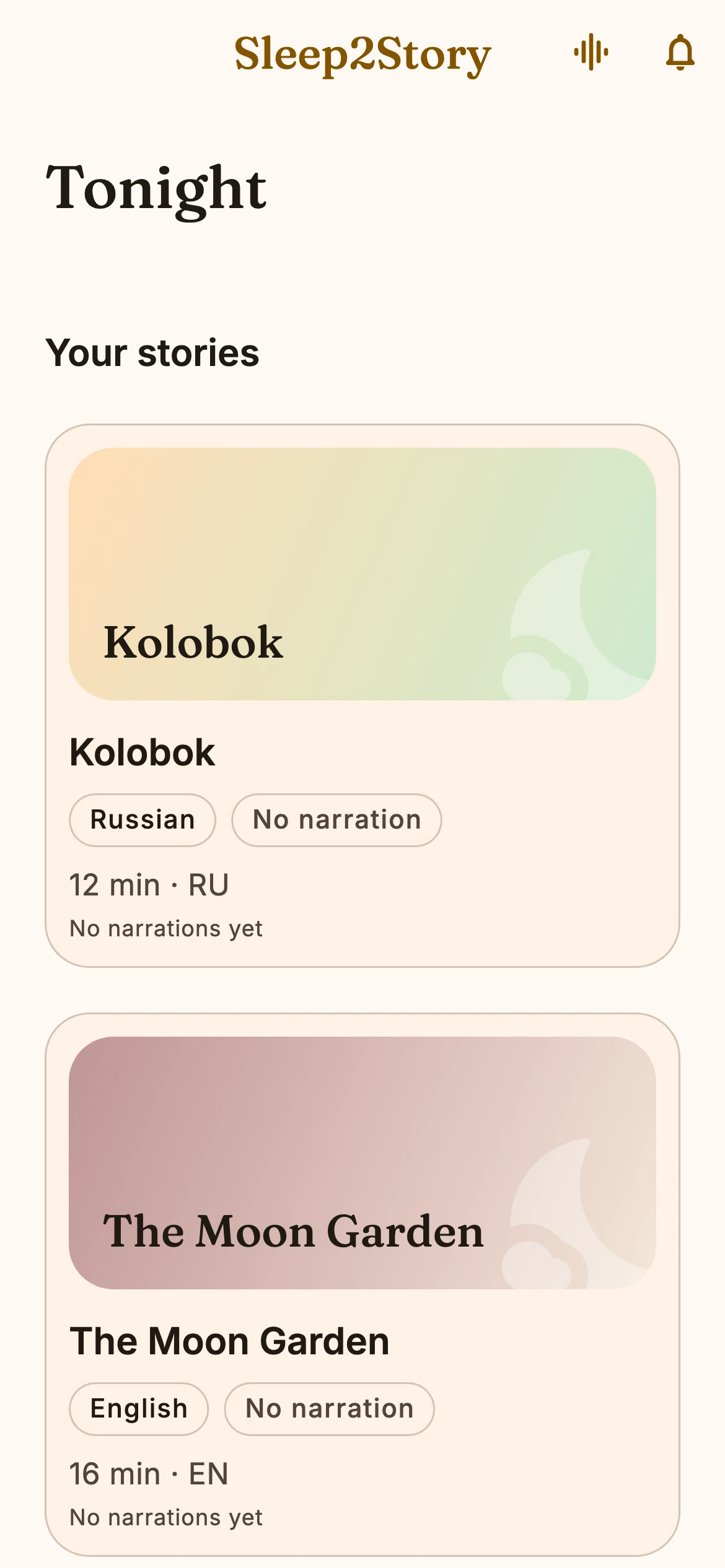
Questions parents ask
Questions about bedtime when a parent is away
Is a video call better than a recording?
Use a call when interaction and timing are dependable. Use a recording when time zones, work or signal may interrupt the call. Many families can use a short live hello earlier and a recording at storytime.
How many stories should we record before a trip?
Start with one complete, tested recording and one short backup message. Add more only after the family knows the setup works. Reliability matters more than a large library.
What if the child asks only for the parent who is away?
Acknowledge the request without pretending the parent can appear: “You wanted Mum tonight. She is away, and I am here with you. We can hear her message, then I will read.” Use the names and wording that fit your family.
Can the same plan work between two homes?
Yes, if both adults want it. Agree on a small shared cue, file access and a closing phrase. Each home can keep its own wider routine; the plan does not require identical bedtimes or household rules.
Does Sleep2Story replace the parent or caregiver at bedtime?
No. The adult who is present still chooses, starts and closes the routine. Sleep2Story is being prepared as one listening option for a complete story text and a consenting adult’s voice sample; it is not yet available in app stores.
Prepare the next part
Sources and editorial note
- PBS KIDS for Parents / Fred Rogers Productions: 11 Tips to Prepare Your Kids For When You’re Traveling Without Them
- United Through Reading: How to Start Family Storytime Traditions, Even Through Deployment
PBS supports the preparation, calendar and routine suggestions. United Through Reading provides the recording-before-separation and storytime-ritual examples for military families. The handoff note, format comparison and missed-call plan are original Sleep2Story editorial material; neither source evaluates Sleep2Story.