Grandparent guide · 02
Record a story
for your grandchild
in the voice they know
A familiar “once upon a time” can travel farther than you can. This guide helps grandparents make a warm, clear bedtime recording that feels personal, even when bedtime happens miles away.
The short answer
Choose one story your grandchild already enjoys, add a personal greeting, record it on your phone in a quiet room, and keep the natural phrases that sound like you.
You do not need a “storybook voice.” The small things—a nickname, a laugh, the way you pause—are what make the recording belong to your family.
Before you press record
Plan for one child, not for posterity
Begin with the person who will listen. Ask a parent what the child currently loves, which names they recognise, and whether there is a familiar book, family tale, rhyme, or lullaby that already belongs to bedtime.
A five- to fifteen-minute recording is a useful first goal. Choose a moment when you are not rushed, put the phone on a stable surface, and tell the family how the recording will be stored and shared before you begin.
Pick a book you may record, an original tale, or a true family memory told in child-friendly words.
Write the child’s name, nickname, and one warm opening line on a note beside you.
Charge the phone, silence notifications, and make a short test in a soft, calm room.
A small legal note: if the story is not your own, check that you have permission to record and use it. Copyright rules differ by country, and distributing a recording is not the same as keeping a private family reading.
The recording
Seven steps from “hello” to a story they can replay
-
01
Ask what your grandchild enjoys now
Children’s favourites change quickly. Check the current bedtime routine, attention span, favourite characters, and any words a parent would rather you avoid. A story chosen for this child will feel closer than a generic performance.
-
02
Choose a text you may record
Use your own story, a public-domain work, or material you have permission to record. If you read a published book, private family use and public sharing can be treated differently, so confirm the rights that apply.
-
03
Open with a message only you would say
Say the child’s name and where you are recording: “Good evening, Maya. Grandpa is reading from the chair by the window.” One concrete detail turns an audio file into a visit.
-
04
Make a short test together
Record thirty seconds and send it to the parent if you need help. They can confirm that the voice is loud enough and the file opens on their device before you spend time on the full story.
-
05
Read at conversation pace
Imagine the child beside you. Slow down a little, but keep your own accent, expressions, and gentle humour. Leave a pause after questions so a young listener can answer, even when the recording cannot hear them.
-
06
Add one small family memory
If it fits the story, include a short memory: the first time you saw snow, the pet you had as a child, or a saying from your own grandparents. Keep it brief and explain unfamiliar names.
-
07
Close, name, and back up the file
End with the same goodnight phrase you use in person. Name the file with the story, speaker, and year, keep the original recording, and store a second copy somewhere the family controls.
Before you send it
Eight details that make a recording feel personal
- The child’s preferred name is spoken correctly
- The story suits their age and current routine
- Everyone understands how the voice will be used
- The room is quiet and notifications are off
- A 30-second test sounds clear on playback
- One family detail or familiar phrase is included
- The ending is calm rather than abrupt
- The original file has a clear name and backup
Troubleshooting
Remove the pressure, then solve the technology
I do not like the sound of my recorded voice
Most people find their recorded voice unfamiliar. Do not chase a broadcaster’s sound; ask whether the words are clear and whether your grandchild will recognise you. That is the useful standard.
We live far apart and I need technical help
Arrange a short practice call with the parent, but record locally in the phone’s voice recorder for cleaner sound. Send the test first and write down the same three buttons you will use for the full take.
Reading a whole story is tiring
Record one chapter or five minutes at a time. Sit comfortably, keep water nearby, and stop before your voice feels strained. Several short, relaxed recordings are better than one exhausting session.
Our family uses more than one language or dialect
Use the language in which affection feels most natural. You can explain an unfamiliar word in the other language, repeat a closing phrase, or make separate short versions without flattening your accent.
The child interrupts when we read live
Build the interaction into the recording. Ask a question, pause for three seconds, then continue with “What did you think?” The child can still take part during playback.
Coming soon · iOS and Android
One short voice sample. A whole family library.
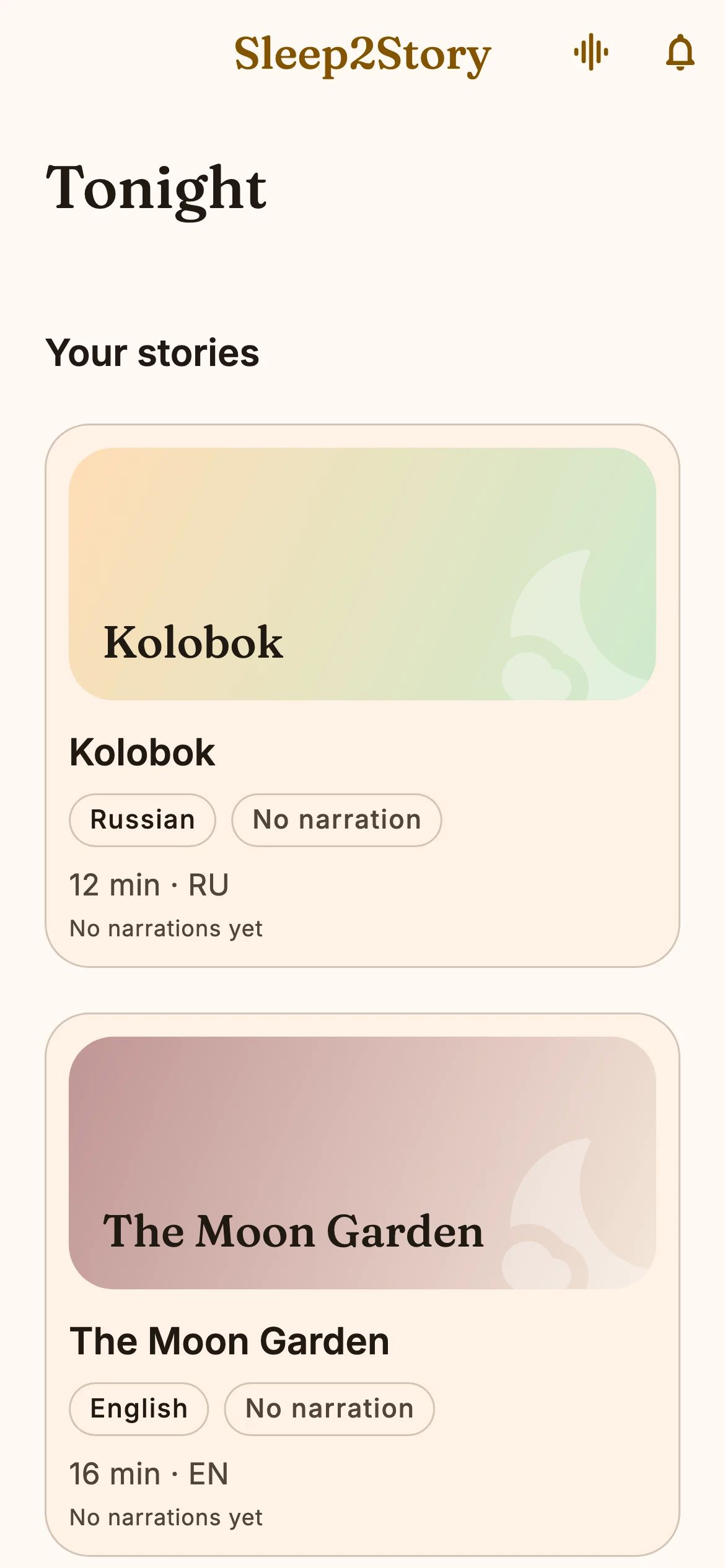
Sleep2Story is being built for parents who want full bedtime stories prepared in a familiar, consented family voice. Record or upload a voice sample you have the right to use, add the complete story text, and let the narration prepare in the background.
- Multiple saved family voices
- English and Russian narration at launch
- A personal library with saved listening position
Questions parents ask
A few answers before you record
How long should a grandparent’s bedtime recording be?
Start with five to fifteen minutes, or one familiar chapter. Younger children may prefer a very short story they can replay; an older child may enjoy a longer family memory split into parts.
Is a phone call or video call enough?
Live calls are lovely for conversation, but a local voice recording is usually clearer and can become part of the bedtime routine. You can do both: talk live, then share a separate recording for replay.
Should Grandma or Grandpa read the whole book?
Only if it is comfortable and you have the right to record the text. A short original story, a family memory, a nursery rhyme you may use, or one permitted chapter can be just as meaningful.
Who should keep the recording?
Agree this before recording. Keep the original in a family-controlled account or drive, limit sharing to the people named in the agreement, and ask again before using the voice for a new purpose.
Further reading
Useful, primary sources
- Apple Support: make a recording in Voice Memos
- American Academy of Pediatrics: Brush, Book, Bed
- World Intellectual Property Organization: copyright FAQ
Sleep2Story provides practical recording guidance, not legal or medical advice.